Is 007 First Light Open World? Mission Structure Explained
No. 007 First Light is a story-led action-adventure organized around authored missions. You can explore and make tactical choices inside those spaces, but that does not make the campaign one continuous free-roam world.
Concept artwork only. It is not an official screenshot, game map, or confirmed location.
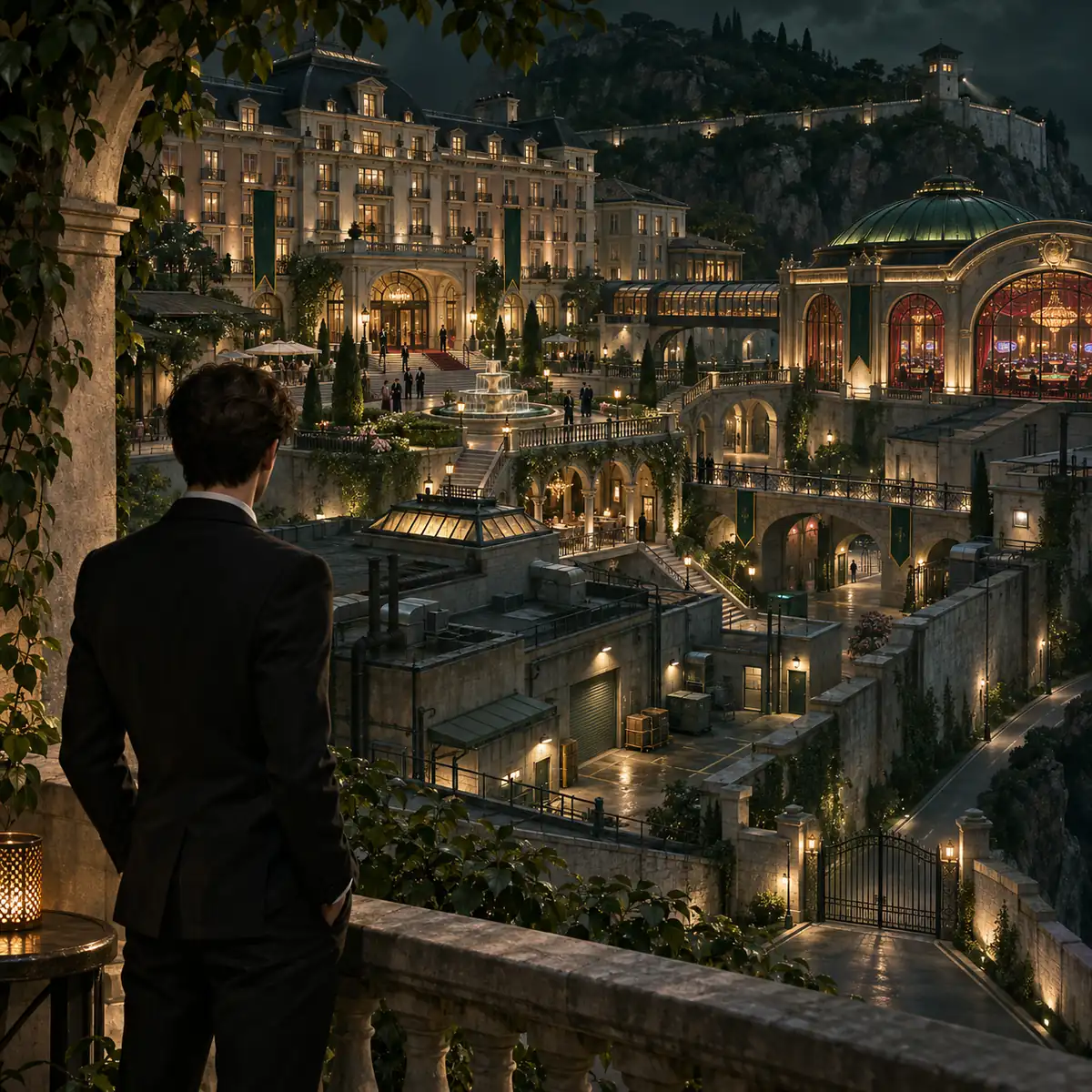
007 First Light world structure at a glance
Quick answer
Is 007 First Light an open-world game?
Is 007 First Light open world? No. It is best understood as a narrative action-adventure built around authored missions, not a single map Bond can freely cross between objectives. IO Interactive presents a story campaign and mission-based play, giving the adventure direction from one dramatic situation to the next.
The important qualification is that mission-based does not mean every room is a corridor. A level can give you space to look around, notice people and objects, and decide how to move toward the objective. You may have more than one useful approach within a mission, while the overall campaign still follows a designed story path.
So, if your question is whether you can treat the game like a continuous city or wilderness sandbox, the answer is no. If you mean whether its individual missions can reward observation and route choice, yes. Those are different kinds of freedom, and separating them is the easiest way to set the right expectation.
A story campaign made of authored missions
An open-world game usually gives the player a persistent region to travel through, with the main story sharing space with optional activities and destinations. 007 First Light is presented differently: its defining frame is Bond's origin story, delivered through a campaign of missions and cinematic action-adventure sequences. The locations serve the current chapter rather than forming one permanent world map.
That distinction affects how you plan your time. Expect the story to set the situation, establish an objective, and move you through a purpose-built environment. The environment can feel broad enough for searching and tactical decisions without promising that every district connects to every other district, or that you can roam there whenever you like.
Mission boundaries are part of the format. Authored scenes can connect encounters, reveal information, and build toward set pieces with tighter pacing than a fully open map. If you prefer clear objectives and story momentum, that focus may feel purposeful rather than restrictive.
What the open-world answer means in practice
Use this distinction when comparing the game with a large free-roam adventure. These are expectations about the campaign format, not claims about a particular mission's size or a feature that could change in a later update.
| Question | Practical answer | Takeaway |
|---|---|---|
| Is there one connected world map? | The game is presented as a mission-led story, not a continuous free-roam world. | Do not expect unrestricted travel between locations. |
| Can a mission still feel open? | Yes. A contained level can offer room to observe and choose a route. | Local freedom is different from world-map freedom. |
| Are exploration and stealth relevant? | They are part of the game's spy-adventure framing and official gameplay material. | Pay attention to the space around an objective. |
| Does every mission use the same layout? | Do not assume that one mission's scale or options describe every other mission. | Treat each location as its own designed scenario. |
| Is it simply Hitman with Bond? | The studio connection invites comparison, but the games have different story and action priorities. | Compare the mission idea, not the full experience. |
What exploration means inside a mission
Exploration in a bounded level is about reading a place, not collecting map markers across a whole country. Before moving toward a visible objective, take a moment to notice entrances, sightlines, people who control access, and paths that could let you avoid a direct confrontation. A useful discovery may be a quieter way forward rather than a separate side quest.
This approach fits a spy story. Information and timing can matter as much as movement. Watching a room can tell you when a route is clear; looking at the environment can suggest where to pause or change direction. The goal is not to clear every icon on a world map. It is to understand enough of the current situation to choose a sensible way through it.
Keep the distinction between a design possibility and a confirmed mechanic. Official descriptions and footage establish the game's narrative action-adventure tone, but they do not guarantee that every location contains every kind of shortcut, disguise, or optional objective. Let the current mission teach its own rules instead of importing assumptions from another game.

A practical way to read each mission space
You do not need to treat a mission as an open-world checklist. Use a short observation loop, then respond to the space the game actually gives you:
Pause before committing
Identify the objective and the nearest obvious entrance. Check who can see that approach before rushing forward.
Scan for alternatives
Look for another doorway, a quieter edge, or information that changes the risk of a route.
Choose one useful next move
Pick a route that fits the current goal. You do not need to inspect every corner before acting.
Adjust when the situation changes
If an approach becomes unsafe, reassess the room and use another available option instead of assuming the mission is over.
This is general advice for a spy-action mission, not a claim that a named gadget or route is available in every level. The game may change the pace from observation to combat or a cinematic sequence. When that happens, follow the objective prompt and the immediate scene instead of trying to force a stealth-only solution.
The official gameplay trailer is useful for judging tone and the mix of action-adventure presentation. It is not a complete systems manual, so consult the game's current official page or update notes if you need confirmation about a specific mode or mechanic.
How 007 First Light compares with Hitman
The comparison is natural because IO Interactive develops both games and players often associate the studio with carefully designed mission spaces. That shared background can help explain why people expect observation and multiple approaches. It does not mean that the two games share the same campaign structure, objectives, or pace.
Hitman is known for stealth sandboxes built around planning and targets. First Light is a Bond origin action-adventure where story, action, and spycraft support a character journey. It may invite you to read a mission space, but the campaign follows its own authored progression.
Think: some local mission flexibility, not Hitman's entire sandbox loop and not a free-roaming Bond world. Check official gameplay footage for tone, then use the mission-led description to set travel expectations.
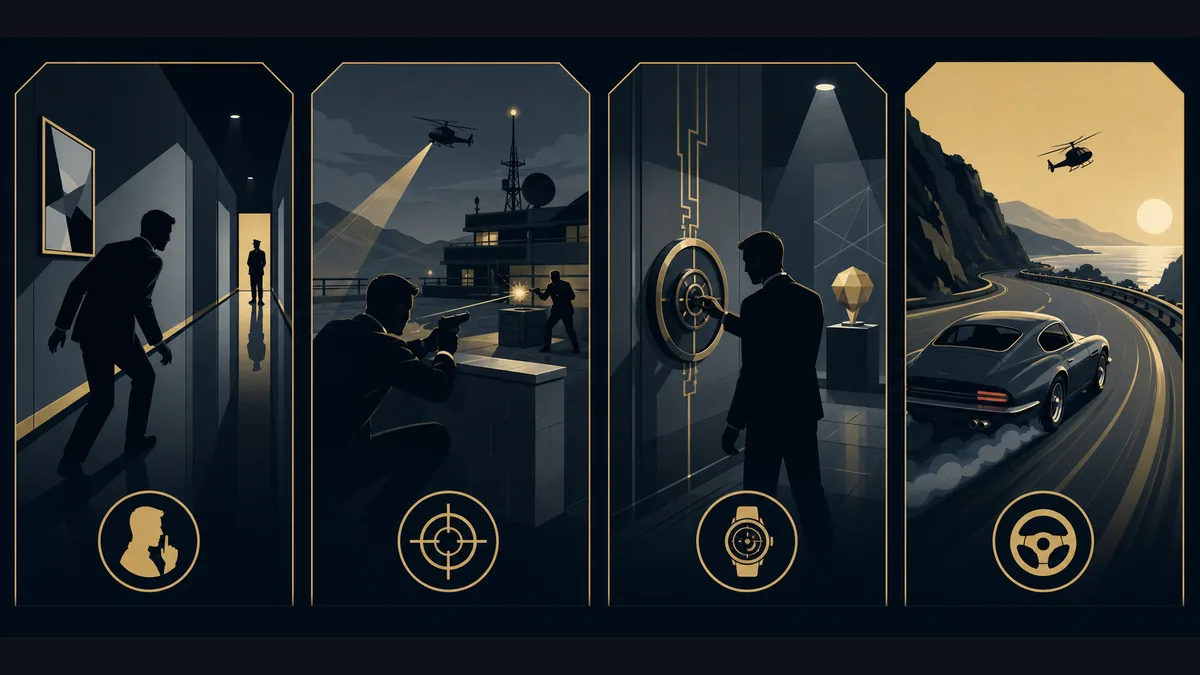
Who may enjoy this mission structure?
The format may suit you if you like a directed story, distinct locations, and levels that reward attention without asking you to manage a huge map. Bond's travel and set pieces are selected for the story, not a permanent open-world checklist.
You may prefer another game if you mainly want free travel between missions, side activities, or one seamless region. That is a format preference, not a quality verdict: First Light is a mission-driven adventure, with exploration tied to the current mission.
For stealth, gadgets, and beginner tactics, see the linked gameplay guide. Use the mission list for names or order; it answers a different question.
Official gameplay footage
Watch the official gameplay trailer for the game's tone, environments, and action-adventure presentation. Footage can illustrate the experience, but it should not be treated as a complete map or feature list.
If the embed is unavailable, open the official IO Interactive page linked below.
Official sources to check
Use first-party pages for current descriptions, footage, platforms, and changes. The open-world label on this page is an editorial classification of the mission-led campaign format.
007 First Light open-world FAQ
Is 007 First Light open world or mission based?
It is mission based, not one continuous free-roam map. Individual areas can still give you room to look around and choose how to proceed.
Can you explore the levels in 007 First Light?
Exploration is part of how to read a mission space: notice entrances, people, sightlines, and possible routes. The exact options vary by scenario, so do not assume every level has the same layout or shortcuts.
Is 007 First Light like Hitman?
There is a reasonable studio and mission-design comparison, but the games are not interchangeable. First Light is framed as a Bond story action-adventure, with authored campaign progression and a different balance of story and action.
Is 007 First Light completely linear?
The campaign is mission-led, but that does not mean every moment is a single corridor. Local exploration and choices can exist inside a designed mission while the overall story remains directed.
Can you free roam after finishing the story?
Do not assume a separate free-roam world from the open-world label alone. Check the current official game page and update notes for confirmed modes; the campaign structure itself is mission-based.